Weather Map, Touchdowns, and a Little Bit of Home: In Defense of Local News
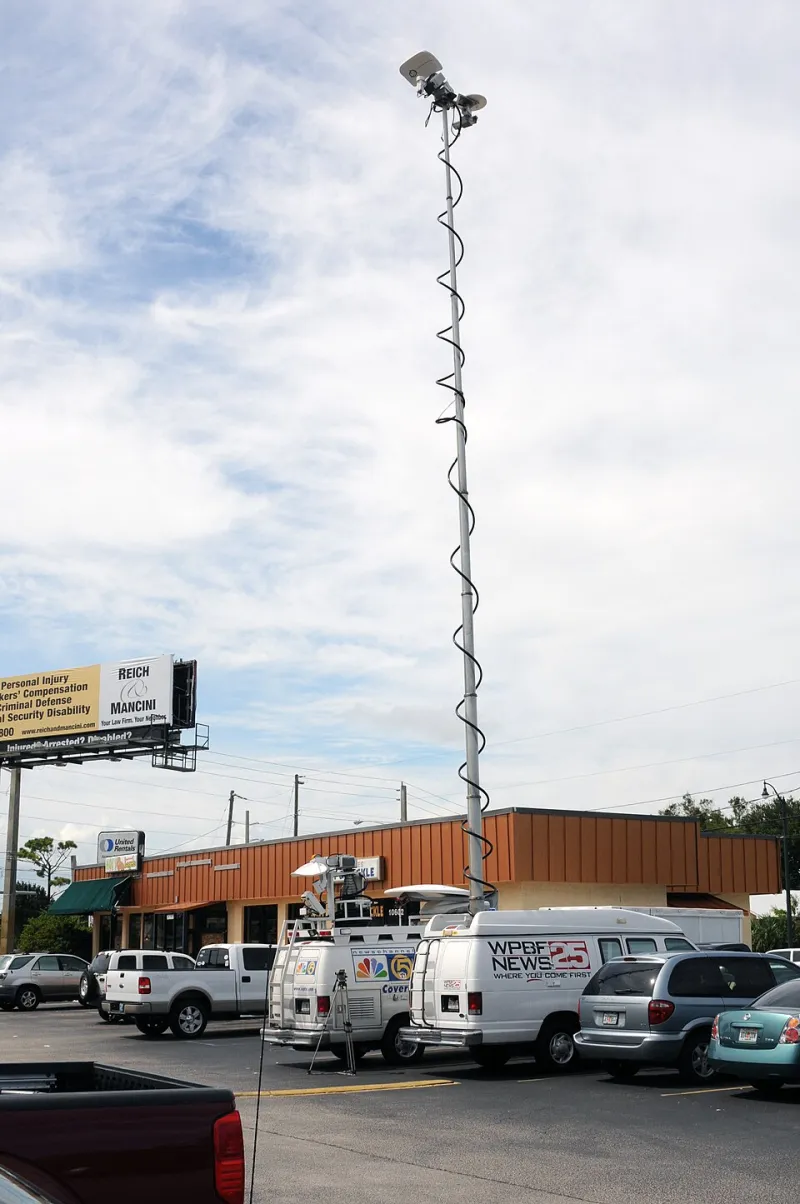
Photo: George Armstrong, Public domain, via Wikimedia Commons
At 6 p.m., my television becomes a local newspaper with moving pictures. The anchor is someone I have seen at the grocery store. The weather map shows counties I can name. The high school football scores run across the bottom of the screen like a ticker for people who care about the actual place they live. It is not glamorous television. Nobody is yelling. Nobody is standing in front of a wall of flashing graphics. And that is exactly why I keep watching.
I did not plan to become a local news person. For years, I treated it as background noise, something that happened to be on while dinner was being made. Then one night I actually sat down and watched. The lead story was about a road closure. The second story was about a library fundraiser. The third was about a bear that had been spotted near a dumpster. I am not saying it was great journalism. I am saying it was honest about what it was: a report on the things happening within a short drive of my house.
The weather is the main event
The weather segment is the closest thing television has to a public service and a variety show. The meteorologist stands in front of a map, points at a cold front, and tells you whether to bring a jacket. That is useful. It is also strangely comforting. The forecast is not trying to be a debate. It is not trying to make you angry. It is just a person explaining that it might rain on Thursday and that Saturday looks nice.
I have come to appreciate the local weather map in a way I never expected. It shows the towns around me. It shows the lake. It shows the highway I take to work. When the forecaster says there is a storm moving in from the west, I know what west means. I can picture the road. I can picture the sky. That is different from a national weather graphic that treats the entire middle of the country like a single gray blob.
High school scores are the local news at its best
If you want to understand a place, watch the high school football scores. They are read quickly, with school names that sound like they belong on a postcard. The anchor does not pretend this is the Super Bowl. They just read the scores. Then they show a highlight of a touchdown that was filmed by someone with a shaky hand and a phone. The crowd cheers. The coach looks pleased. It is small and specific and completely free of the usual television noise.
I do not know anyone on those teams. I have never been to most of those schools. But I still like seeing the names. It reminds me that the place I live is not just a dot on a map. It has teams and rivalries and Friday night lights. It has people who care about a game that will never make national news. That is not a small thing.
The feature stories are the secret weapon
The feature stories are where local news really earns its keep. A new bakery opens. A retired teacher plants a garden. A middle school builds a cardboard boat race. A man has been collecting soda cans for 30 years. These are not stories that will change the world. They are stories that fill in the world. They give you something to talk about at the hardware store. They make the town feel less anonymous.
National cable news is built on urgency. Everything is a crisis. Everything is breaking. Everything is a panel of people arguing about something none of them can fix. Local news has urgency too, but it is a different kind. The urgency is a bridge closing, a boil-water advisory, a school board meeting. It is the kind of urgency you can actually do something about, or at least prepare for. That makes it feel more honest.
It knows what it is
Local news does not have the budget of a streaming drama. The graphics look like they were built in 2010. The set is a desk and a screen. The anchors sometimes stumble over a name. That is part of the charm. It is not trying to be a cinematic universe. It is trying to tell you what happened today in the place where you live.
There is a comfort in that. At 6 p.m., I do not need a shouting match. I do not need a breaking-news banner that stays on the screen for three hours. I need to know if it is going to rain, if the road is closed, and if the local team won. I need to see a familiar face tell me something plain. That is not low-stakes television. It is the most grounding kind.