The Case for the $30 Million Movie You Can Finish in One Sitting
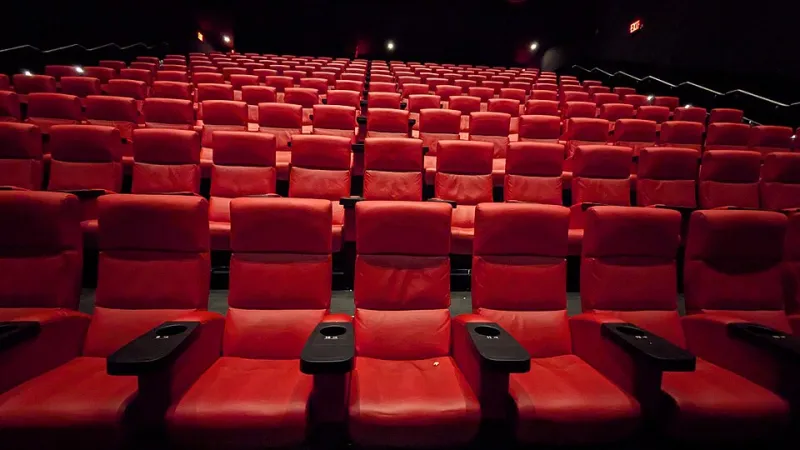
Photo: Eden, Janine and Jim from New York City, CC BY 2.0, via Wikimedia Commons
I went to the movies on a Tuesday a few weeks back, mostly because the Tuesday price at my local theater is seven dollars and I had nothing else going on. The movie I saw was about a wedding, had four people in it I recognized, and wrapped up in ninety-four minutes with an ending that ended. No post-credits teaser. No hint that a second one was already in production. When the lights came up, my wife said, "That was a movie." She meant it as high praise, and she was right.
It cost, if the internet is to be believed, somewhere in the neighborhood of thirty million dollars to make. That number has been rattling around in my head ever since.
What I Mean by a $30 Million Movie
I'm not talking about a genre. I'm talking about a shape. These are the movies that are self-contained, under two hours, built on a premise you could explain to a stranger in a parking lot, and structured like a joke or a short story — setup, escalation, ending. A comedy, usually. Sometimes a small drama or a thriller with three locations and a good script.
They were everywhere once. Groundhog Day. Election. Little Miss Sunshine. Game Night, more recently, which is basically a perfect version of the form. Nobody was building a cinematic universe out of those. They came out, they played for six or eight weeks, you saw them, you told a friend, that was it.
I'm not claiming every one of them was good. Plenty were forgettable. But forgettable is a bargain at that price, and occasionally one of them would land so hard that it stayed with you for years.
Why the Middle of the Market Got Thin
I've read enough box office commentary to know there isn't one villain here, so let me lay out the math the way I understand it.
A big franchise picture can be sold in ninety countries at once, spawn merchandise, and justify a marketing budget bigger than most small films' entire production. A thirty-million-dollar comedy has to be sold almost entirely on jokes and faces, which means the ad spend starts to rival the budget, which means the studio needs it to work the first weekend. And comedy is famously hard to translate — a punchline that kills in Ohio might need a whole new script overseas.
Then streaming changed the second half of the equation. Theaters used to get a long, slow tail off these movies as word of mouth built. Now the window is short, and the movie shows up on a service a few weeks later, where it competes with four thousand other titles and an algorithm that has no particular reason to push it. Mid-budget movies don't generate the binge hours that keep a platform's metrics happy. They're ninety-four minutes long. They end.
None of that is a conspiracy. It's just incentives pointing a different direction than the one that used to produce a decent comedy every month.
Why This Isn't Nostalgia
Here's where I want to be careful, because "they don't make 'em like they used to" is the least useful sentence in film writing. There are more movies released in a given year now than at any point in history. More countries are making them. More first-time directors get a shot. The problem isn't supply. It's the shelf.
What's missing is the easy path. You used to be able to walk into any mall theater on a Friday and find one of these playing at 7:40. Now you have to know it exists, and you have to know where it landed. That's an inconvenience, not a tragedy, but it does mean the burden shifted onto us.
A Practical Shopping List
So here's the part where I stop describing the problem and start solving it in my own small way.
Follow the distributors, not the stars. A handful of labels put out most of the movies I actually end up liking — the ones with unusual names and modest logos at the front. If a movie is coming from one of them, I'll read the description instead of scrolling past it.
Check the small theaters first. The two-screen place downtown, the art house that also shows mainstream stuff, the theater attached to a university. They book these films because they have to. They also tend to have cheaper tickets and better popcorn.
Look at the runtime before the trailer. A ninety-five-minute running time is a feature, not a warning label. If a comedy is two hours and eleven minutes, someone got talked out of a good edit.
Use the library card. Most US library systems still offer free streaming services with a card, and their catalogs skew exactly toward the mid-budget stuff that fell off the big platforms. I've watched more small movies this way than any other way.
Go on the cheap night. Tuesday, Wednesday, whatever your local chain discounts. Seven dollars is roughly the cost of a fancy coffee now, and it changes how you feel about taking a chance.
The Vote That Counts
I realize one person buying one ticket on a Tuesday is not going to redirect an industry. But the only signal a studio reliably reads is whether the seat was filled, and the only signal a small theater reads is whether the room was full enough to book another one next month.
So that's my modest case. Not "bring back the old days" — just this: the next time you're deciding between a two-hour-forty-minute installment in something and a ninety-minute comedy nobody's posting about, take the shorter one. Bring a friend. Tell someone afterward. That's the whole plan, and it works about as well as any plan I've got.