Register Four Is a Trust Exercise: A Field Guide to the Express Lane
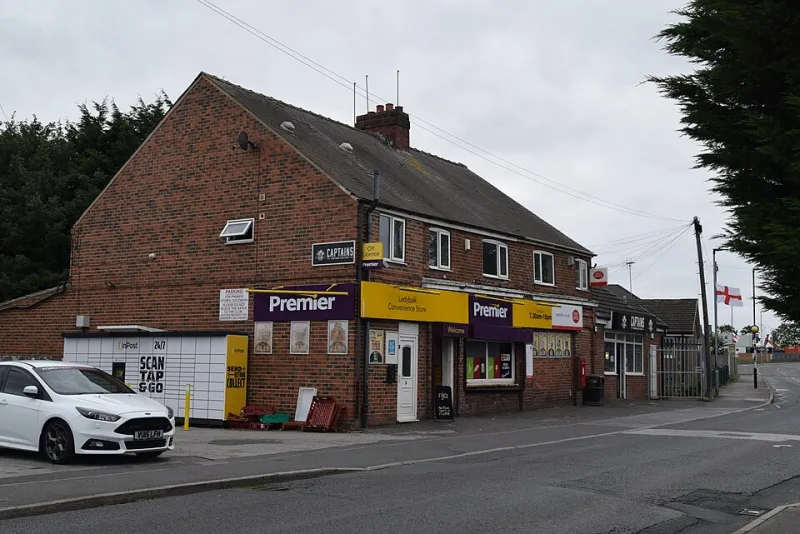
Photo: Mtaylor848, CC BY-SA 4.0, via Wikimedia Commons
There is a particular kind of quiet that settles over a grocery store express lane when someone with a loaded cart joins the line. It is not silence exactly. It is the sound of six people deciding, almost at once, to become very interested in the candy rack. I have been on both sides of that moment: the shopper with three items and the shopper with, let us say, a generous interpretation of the word few. The express lane is one of the last everyday places where we rely on strangers to make a small, unenforced promise. When someone breaks it, the whole aisle feels it.
The sign is simple. The math is not.
Five items or fewer. It is right there in bold letters, usually with a little arrow. And yet the express lane is where ordinary people discover that they have wildly different definitions of the word item. A bunch of bananas is one item, unless you are the person who counts each banana and feels personally attacked by the sign. A rotisserie chicken is one item. The two side dishes that came with it are, apparently, also items. A case of soda is one item, but it takes up the room of four, which is its own kind of math.
Most people are not trying to game the system. They are just tired, or hungry, or shopping with a toddler who has decided that the cereal aisle is a reasonable place to practice screaming. They see a shorter line and think, close enough. I get it. I have done it. The difference between five items and seven items is not a moral collapse. It is a tiny act of optimism, the belief that no one will notice and that the cashier will not mind.
But someone always notices. That is the thing about the express lane. It is a public counting exercise, and everyone is doing the math.
The cashier has seen everything
Here is the part we forget while we are standing there rehearsing our disappointed face: the cashier did not invent the express lane. They did not write the sign. They are not a bouncer at a nightclub for groceries. They are trying to move a line along, scan a rotisserie chicken, and get through a shift without a debate about whether a six-pack counts as one item or six.
Cashiers know the difference between a mistake and a habit. They can spot the person who genuinely miscounted and the person who has decided that the express lane is simply the line for people who are in a hurry. They also know that arguing with a customer over two extra items is not worth the time it would take to scan them. So they scan. They keep moving. They have the patience of someone who has seen the same small drama play out a hundred times.
We could stand to borrow some of that patience. The person in front of us is not the villain of our afternoon. They are just another shopper who made a different call at the end of a long aisle.
Why it gets under our skin
We are not really mad about the green beans. We are mad about the agreement. The express lane works because everyone in it has quietly accepted the same deal: you keep your basket small, and in exchange, you get to move faster. When someone ignores the deal, it feels less like a grocery problem and more like a small civic failure. If this promise does not hold, what else is falling apart? The self-checkout? The return line? The polite wave at the four-way stop?
That is a lot of weight to put on a basket of groceries. But everyday life is made of these tiny contracts. We hold the door. We let the other car merge. We do not take the last doughnut without asking. The express lane is one of the few places where the contract is printed on a sign, which makes it easier to notice when someone ignores it.
It also makes us feel foolish for caring. No one wants to be the person counting another adult's groceries. No one wants to be the self-appointed lane monitor. But the frustration is real because the time is real. We all have somewhere to be, or at least somewhere we would rather be than standing behind a cart that is technically a small grocery store.
A clearer sign would help
Part of the problem is that the sign is too polite to be useful. Five items or fewer is a suggestion dressed up as a rule. It does not tell you what to do if you are not sure. It does not explain whether a basket counts as one item or as all the items inside it. It does not address the person with a handbasket who figures that a basket is a container, not a count.
A better sign might say: Five items or fewer. Please count before you join. If you are unsure, use the regular lane. That is not hostile. It is just clear. A second sign at the entrance to the lane would help too, rather than one lonely placard at the register that you only see after you have already committed.
Some stores have tried adding a polite reminder on the conveyor belt. Others have a cashier who will gently redirect a full cart to the next lane. That works because it is not a confrontation. It is just a nudge. The express lane does not need a sheriff. It needs a clearer set of expectations and a little follow-through.
The case for a little grace
Still, a strict count is not always the right response. I have seen a parent with a sleeping baby and six items. I have seen a person on a lunch break grab one extra sandwich because the line at the deli was too long. I have been the person who miscounted because I forgot the milk in the bottom of the basket. In those moments, grace is the better policy. The express lane is not a courtroom. It is a checkout aisle.
Grace does not mean endless tolerance, though. There is a difference between a small miscount and a full cart pretending to be a quick stop. The first deserves a shrug. The second deserves a polite redirect. The rest of us can be patient without being doormats.
The small contract
The express lane is not glamorous. It is not where anyone wants to spend a Saturday morning. But it is one of the last unglamorous places where strangers have to trust each other to do a small thing right. The sign says five items or fewer. The cashier keeps scanning. The rest of us count, or pretend not to count, or decide that today is not the day to say something.
And then the line moves, the belt beeps, and we all go back to our separate afternoons. The contract holds. Most of the time, that is enough.